













The Benefits of Mirror Play for Baby
January 5, 2026
One of the easiest ways to entertain a baby is to place them in front of a mirror. If you’ve ever noticed how intensely your little one gazes at their reflection in a mirror, it’s not because they like the way they look (although who wouldn’t), but simply because the human face is fascinating for them to look at. Mirror play offers numerous benefits for your baby and is a great way to keep them engaged and learning during tummy time!
What is mirror play?
Mirror play is an engaging activity and a powerful tool in early development that helps your baby recognize their own reflection and develop a sense of self. Incorporating a mirror during play has numerous benefits and supports your baby’s healthy development and learning.

Why babies love mirror play
Before they’re about 18 months old, babies can’t recognize themselves in the mirror. Your little one’s favorite thing to look at is the human face (preferably yours!), and a mirror offers the opportunity for them to gaze upon their own reflection for as long as they want. This helps your baby focus their eyes, track images, and explore everything that their face can do.
The benefits of mirror play for babies
Mirror play is something your baby can do everywhere and anywhere–with no batteries or screens needed! It sparks curiosity and delight, and supports their cognitive and physical development.
-
Visual tracking: Watching their own movements in the mirror helps your baby focus on and follow their reflection, which strengthens their eyes and visual tracking ability. This sets the foundation for overall visual development and hand-eye coordination.
-
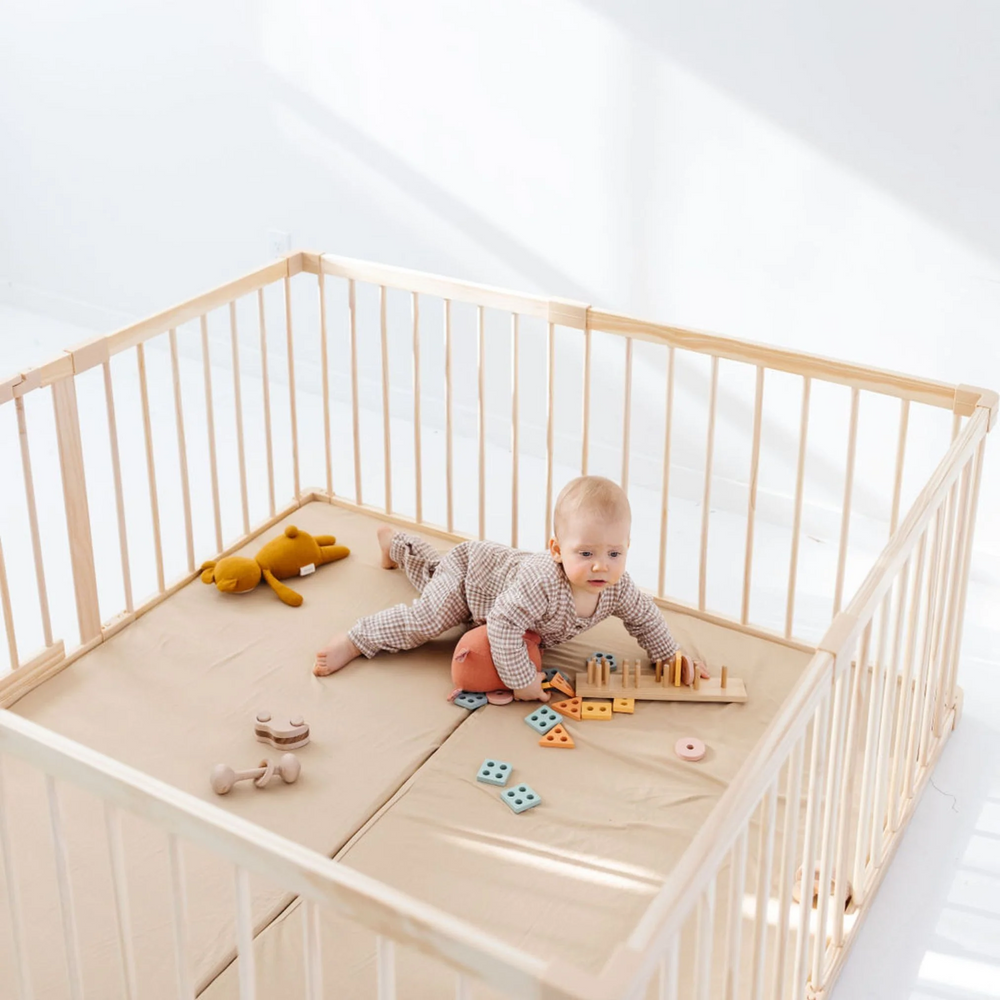
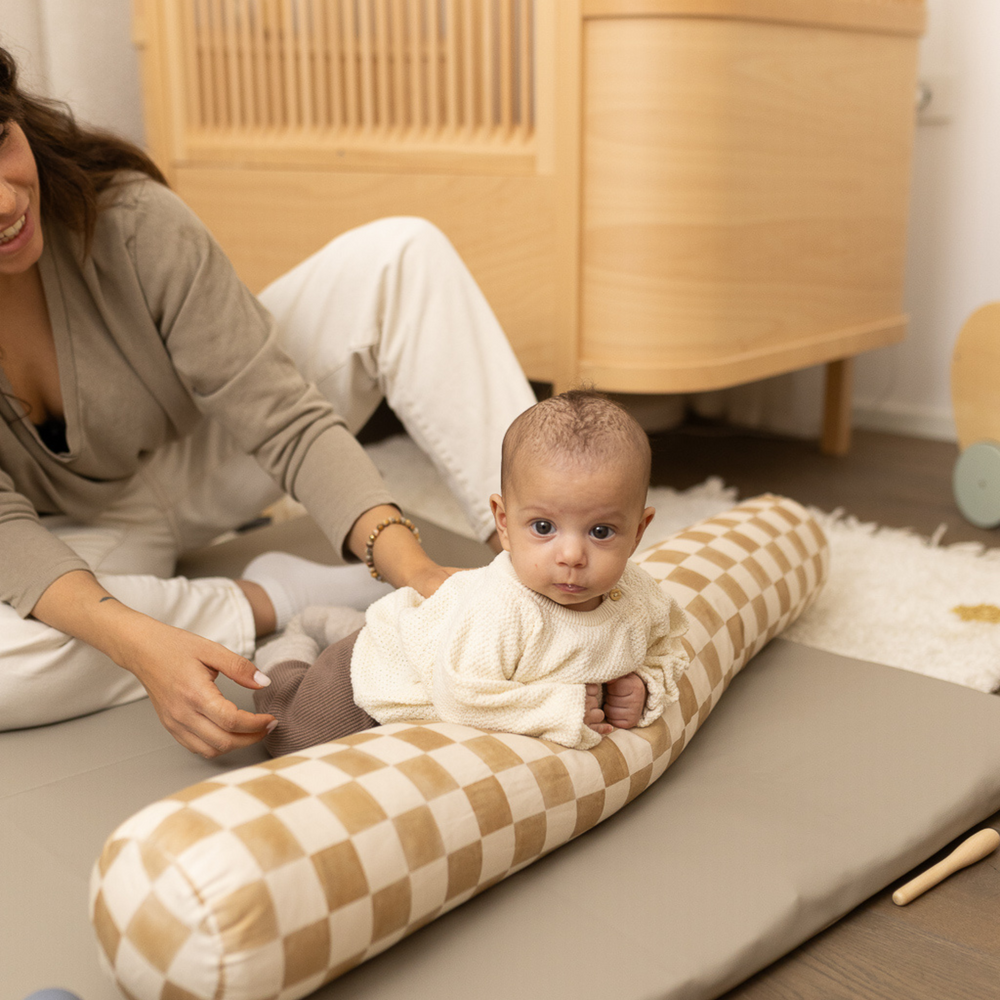
Motor development: Mirror play can help babies who struggle with tummy time and keep them engaged for longer. It also encourages your baby to reach, crawl, and move to interact with their reflection, which strengthens their muscles, hand-eye coordination, and spatial awareness.
-
Language skills: Using a mirror to point and name body parts (eyes, nose, mouth, ears) can build your baby’s vocabulary. Practice sounds and words by exaggerating mouth movements to help your baby with correct lip and tongue placements.
-
Developing self-awareness: Mirror play nurtures your little one’s developing self-awareness, which is critical for their social-emotional development. This is a cognitive milestone that occurs between 15 and 18 months of age.
-
Emotional awareness: The first step in expression is being able to understand and identify various emotions. Use a mirror to imitate different facial expressions and name the emotions (smiling for “happy” and frowning for “mad”).

How to make mirror play safe for babies
Not all mirrors are created equal, and you’ll want to choose one that isn’t heavy, won’t break easily, and can be incorporated during play.
-
Use a baby-safe mirror. Unlike regular mirrors, baby-safe mirrors are lightweight and shatterproof without the risk of broken glass.
-
Prop it up. To keep your baby engaged during tummy time, you’ll want a mirror that’s not only sturdy but can also be propped up at eye level.
-
Always supervise. Whether your baby is playing independently or with someone else, they should always be supervised by an adult for safety!
The Toki pick
The Toki Kids Play Mirror is a five-star play essential that features an unbreakable PETG mirror on one side and a wooden bead abacus on the other. The body is crafted from high quality needlewood and non-toxic paints and glue that are environmentally friendly.
This play mirror encourages visual development, fine motor development, cognitive development, gross motor development, and more


Shop the blog
Play Mirror
$45 - $45
An all-in-one mirror and toy for interactive, engaging floor play
Shop Now
About the Author: Alice
Alice Mendoza is a copywriter and blog writer based in Los Angeles. She began writing for a baby brand while on maternity leave, and realized she had found her niche. Today, she writes exclusively within the baby space, using her BFA in Creative Writing and her own experience as a mother to guide her. When she’s not working, you can find her chasing down her toddler, going on walks around the neighborhood, or watching reality TV.


